
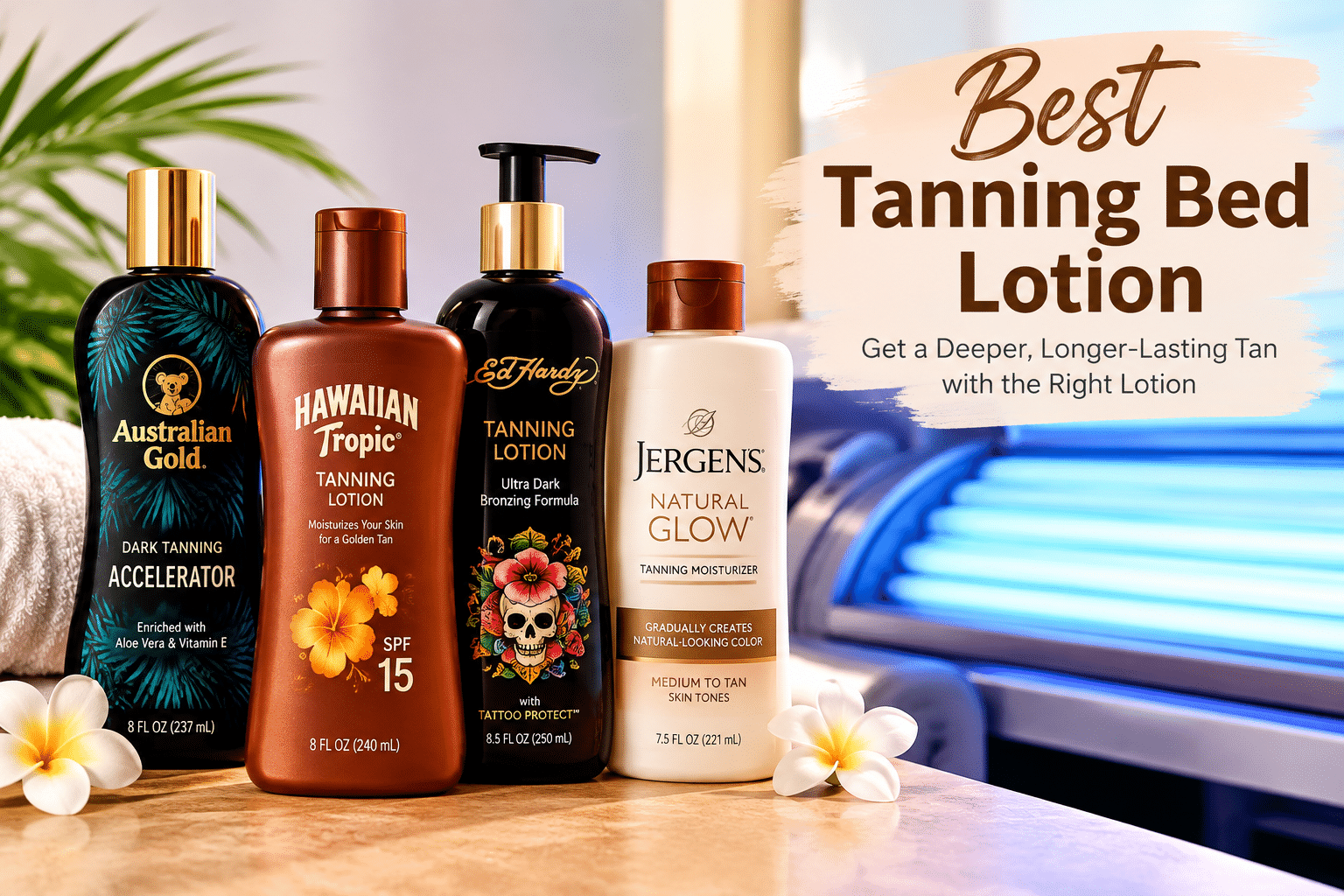
Want a smooth, glowing-looking tan without ending up with dry, uncomfortable skin? Choosing a tanning lotion can seem simple, but with so many bronzers, moisturizers, and specialty formulas available, it is easy to choose the wrong product for your needs. The key is understanding what a tanning lotion actually does, which ingredients support skin hydration, and which claims deserve a closer look.
This guide explores what to look for when shopping for tanning bed lotion, the different types available, important ingredients, common mistakes, and safer ways to achieve a bronzed appearance.
What Is Tanning Bed Lotion?
Tanning bed lotion is a product marketed for use alongside indoor tanning. Formulas can contain moisturizers, bronzers, fragrances, and other cosmetic ingredients designed to condition the skin or temporarily enhance its appearance.
It is important to understand that a lotion does not make indoor UV exposure safe. A tanning lotion should not be considered sunscreen or protection against UV-related skin damage.
If your goal is simply a bronzed appearance, a sunless tanning product can provide an alternative without requiring UV exposure.
Why Choosing the Right Lotion Matters
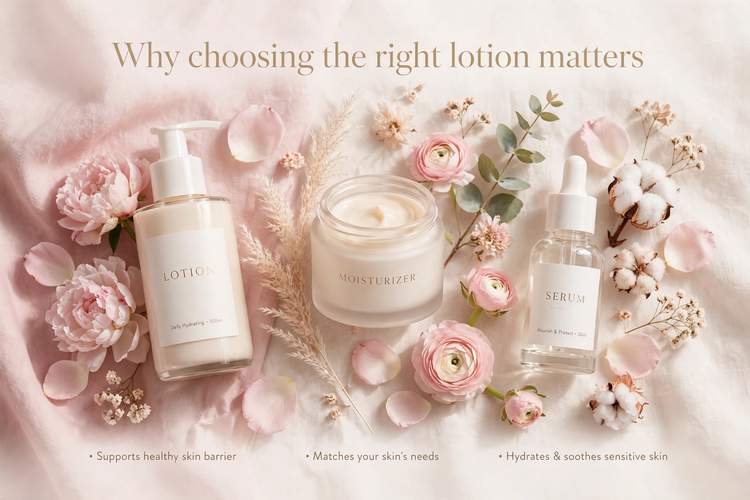
Many people associate tanning with dry or tight-feeling skin. Frequent exposure to UV radiation can contribute to skin damage and premature skin aging, while some tanning products may also contain ingredients that irritate sensitive skin.
A good cosmetic formula should therefore be evaluated for qualities such as:
- Skin-conditioning ingredients
- Moisturizing ingredients
- Compatibility with your skin type
- Fragrance sensitivity
- Bronzer type
- Ease of application
- Product instructions and warnings
Rather than choosing a lotion simply because it promises a darker or faster tan, look at the complete ingredient list and intended use.
Types of Tanning Lotions
Different tanning lotions are marketed for different cosmetic purposes. Understanding these categories can make product labels easier to understand.
Moisturizing Tanning Lotions
These formulas focus on conditioning the skin. Ingredients such as glycerin, aloe, and certain plant-derived oils may help support the skin’s moisture level.
For people concerned about dryness, a moisturizing formula may be more appealing than a product focused primarily on bronzing.
Bronzing Lotions
Bronzing lotions are designed to make the skin appear more tanned. Some use cosmetic bronzers that provide an immediate color effect, while others contain ingredients intended to develop color gradually.
Always read the label carefully because the color-producing ingredients and results can vary considerably between products.
Tingle Lotions
Some tanning lotions are marketed with a “tingle” sensation. These products can create warmth, redness, or a tingling feeling.
A tingling sensation does not mean that a product is working better, and it can be uncomfortable or irritating, particularly for sensitive skin. Following the manufacturer’s warnings is important.
Accelerator-Style Lotions
Some products are marketed as tanning accelerators. These claims can make products sound more powerful, but consumers should distinguish cosmetic marketing claims from evidence about UV safety.
A lotion marketed as an accelerator does not eliminate the health risks associated with indoor UV exposure.
Ingredients to Look For
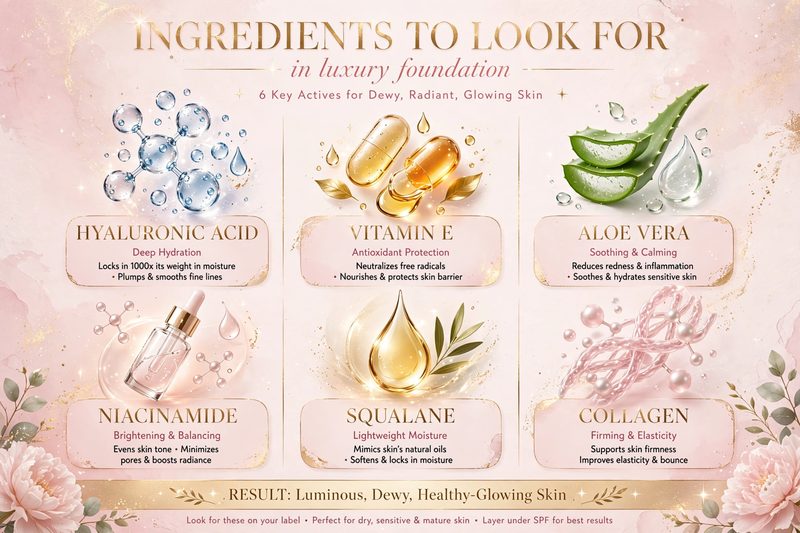
When evaluating a tanning lotion, ingredients can tell you more than the front of the package.
Aloe
Aloe is commonly included in skincare products because of its soothing and conditioning properties. It can be useful in formulas designed to leave skin feeling comfortable and moisturized.
Glycerin
Glycerin is a humectant that helps attract and retain moisture in the skin. It is widely used in cosmetic moisturizers.
Hyaluronic Acid
Hyaluronic acid is another popular moisturizing ingredient. Depending on the formulation, it can help give skin a hydrated and smoother-looking appearance.
Vitamin E
Vitamin E is commonly used in skincare formulations as a conditioning ingredient and antioxidant.
Plant Oils
Ingredients such as coconut oil, sunflower oil, or other botanical oils may be included to provide emollient benefits. However, people with sensitive or acne-prone skin should consider how their skin responds to individual formulas.
What About Bronzers?
Bronzers are one of the biggest differences between tanning lotions.
A cosmetic bronzer can provide an immediate visual effect, while some formulas use self-tanning ingredients that gradually develop color.
When choosing a bronzing product, check:
- Whether the color is immediate or gradual
- Whether the formula can transfer onto clothing
- Whether the product contains fragrance
- Whether the color is designed for face or body use
- Whether the manufacturer provides specific application instructions
Remember that a cosmetic bronzer does not protect the skin from UV radiation.
How to Choose a Lotion for Your Skin Type
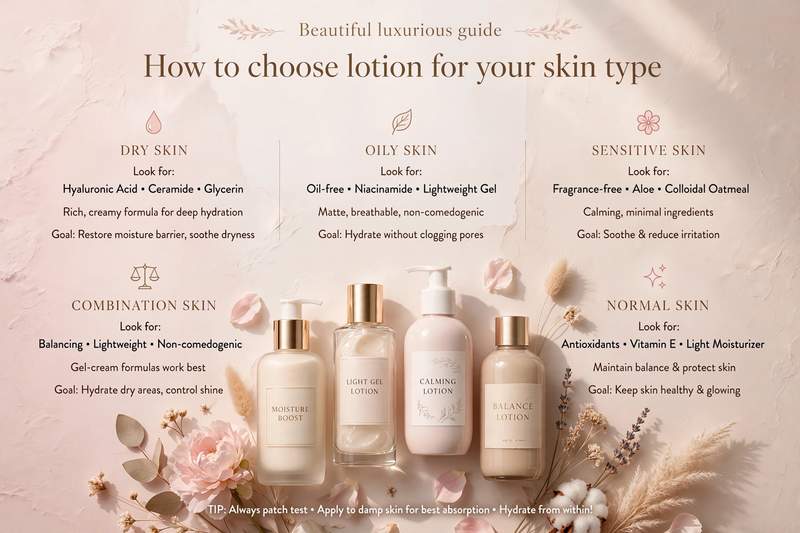
Your skin type should be considered before purchasing any tanning-related cosmetic.
Dry Skin
Look for moisturizing ingredients such as glycerin, aloe, and emollient ingredients. Avoid formulas that leave your skin feeling excessively tight or uncomfortable.
Sensitive Skin
A simpler formula may be preferable. Consider fragrance-free or low-fragrance options when appropriate, and always check the ingredient list for substances you already know irritate your skin.
Normal Skin
You may have more flexibility, but moisturizing ingredients are still useful for maintaining comfortable-feeling skin.
Combination or Oily Skin
Consider lighter cosmetic formulas that do not leave an excessively greasy finish. Individual ingredients matter more than simply choosing a product labeled for a particular skin type.
Patch Testing Is Worth Considering
Before applying a new cosmetic over a large area, consider testing a small amount according to the product’s directions.
This can help you identify whether the formula causes irritation or an unwanted reaction. Stop using a product if you experience significant irritation and seek appropriate medical advice if a reaction is severe or persistent.
Never assume that a product is suitable simply because it is marketed as a tanning lotion.
Common Tanning Lotion Mistakes
Choosing a product based only on its promise of a darker result is one common mistake.
Other mistakes include:
Ignoring the Ingredient List
Marketing claims can be attractive, but the ingredient list provides more useful information about what you are actually applying.
Assuming Lotion Provides UV Protection
This is particularly important. A tanning lotion should not automatically be treated as sunscreen.
If sun protection is needed, use a properly labeled broad-spectrum sunscreen according to its directions.
Using Products Outside Their Intended Purpose
Some tanning products are intended specifically for body use. Others may have separate facial formulas.
Check the manufacturer’s instructions before applying a product to areas that are not listed on the label.
Choosing a Product Because It Feels Strong
A strong tingling or warming sensation is not a reliable measure of effectiveness. Discomfort can indicate irritation rather than a better cosmetic result.
Indoor Tanning and Skin Health
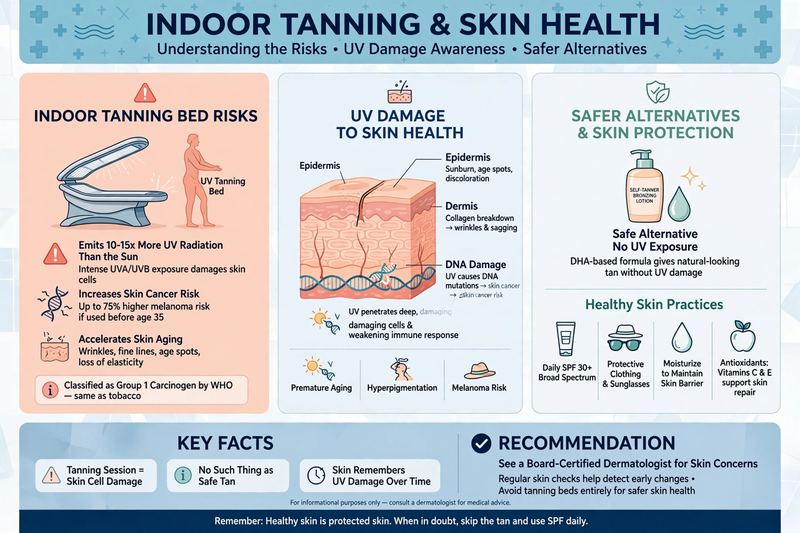
Indoor tanning involves exposure to ultraviolet radiation. UV exposure can damage skin cells and contribute to premature skin aging and skin cancer risk.
For this reason, a lotion should not be viewed as a way to make indoor tanning harmless.
If your objective is the appearance of a tan rather than UV exposure itself, consider sunless options such as self-tanning lotions, mousses, drops, or professional spray-tan services.
These products can create a bronzed appearance without requiring intentional UV exposure.
Tanning Lotion vs. Self-Tanning Products
These two categories are often confused.
A tanning-bed lotion is marketed for use with indoor tanning, whereas a self-tanning product is designed to create color without requiring UV exposure.
If avoiding UV exposure is your priority, look for a reputable self-tanning product and follow its instructions carefully.
Self-tanning products also do not replace sunscreen. A person can have a visibly tanned appearance while still being vulnerable to UV damage.
How to Get a More Even-Looking Cosmetic Tan
For people using sunless tanning products, preparation can make the cosmetic result more consistent.
General skincare steps include:
- Start with clean, dry skin.
- Follow the product’s preparation instructions.
- Apply the product evenly.
- Pay attention to areas that commonly become uneven.
- Wash your hands after application when the product instructions recommend it.
- Allow the product to develop according to the label.
- Maintain moisturized skin as recommended.
The exact process varies between products, so the manufacturer’s instructions should always take priority.
What Makes a Tanning Lotion Worth Considering?
Instead of searching only for the product promising the darkest result, consider several factors together.
A product may be worth considering if it:
- Clearly lists its ingredients
- Provides understandable usage instructions
- Identifies its intended application area
- Matches your skin’s needs
- Has appropriate warnings
- Avoids ingredients you know irritate your skin
- Provides realistic cosmetic claims
- Comes from a reputable manufacturer
This approach helps you make a more informed purchase without relying solely on advertising language.
Frequently Asked Questions
What is the best tanning bed lotion?
There is no single tanning lotion that is best for everyone. Skin type, ingredient preferences, sensitivity, and whether you want moisturizing or cosmetic bronzing effects can all influence your choice.
Does tanning lotion protect against UV rays?
Do not assume that tanning lotion provides UV protection. Check the label carefully. Products intended to provide sun protection should be specifically labeled as sunscreen and provide an SPF rating.
Can tanning lotion make indoor tanning safe?
No. A cosmetic lotion does not remove the health risks associated with UV exposure from indoor tanning.
What is better for a bronzed appearance: tanning lotion or self-tanner?
If your main goal is the appearance of a tan without UV exposure, a self-tanning product is an alternative worth considering.
Are bronzers permanent?
It depends on the type of bronzer. Some cosmetic bronzers provide temporary color, while self-tanning ingredients can create color that gradually fades as the outer layer of skin naturally sheds.
Can tanning lotion be used on the face?
Only use a product on the face if the manufacturer states that it is suitable for facial application. Facial skin can be more sensitive than body skin.
What is the best lotion to use in a tanning bed?
There isn’t a tanning-bed lotion that makes UV exposure safe. If your goal is softer, moisturized-looking skin, choose skincare based on ingredients and your skin type rather than promises of faster or darker tanning.
What tanning bed lotion gets you the darkest?
A product marketed for a darker or faster tan does not eliminate the risks of UV exposure. There is no safe way to use a tanning bed to achieve a darker tan.
What is the best tanning lotion for using a sunbed?
Instead of choosing a product based on tanning strength, check the ingredient list, intended use, and warnings. Tanning products without sunscreen do not protect against UV-related damage.
What is the best tanning bed lotion to get dark fast in 2026?
There isn’t a safe tanning-bed lotion that should be recommended for getting dark quickly. For a bronzed appearance without intentional UV exposure, sunless tanning products are an alternative; the FDA describes these products as creating color without UV exposure.
How to get super dark in a tanning bed?
I can’t provide instructions for increasing UV tanning or getting darker faster. Indoor tanning is associated with skin cancer and other UV-related damage, and the American Academy of Dermatology recommends avoiding tanning beds.
What is the highest rated tanning lotion?
Ratings vary by retailer and reviewer, so there isn’t one universally highest-rated tanning lotion. For an article, it’s better to compare products using transparent criteria such as ingredients, moisturizing properties, intended use, customer feedback, and manufacturer information rather than claiming one product is universally “best.”
Final Thoughts
The best tanning bed lotion is not necessarily the product promising the fastest or darkest result. A better approach is to consider skin comfort, ingredients, product instructions, and your actual cosmetic goal.
Look for formulas that suit your skin type, pay attention to moisturizing ingredients, and be cautious with products that emphasize intense sensations or exaggerated results.
Most importantly, remember that tanning lotion does not make indoor UV exposure safe. If you simply want a smooth, bronzed appearance, sunless tanning products offer an alternative that avoids intentional UV exposure.
By reading labels carefully and choosing products based on your skin’s needs rather than marketing claims alone, you can make a more informed skincare decision.