
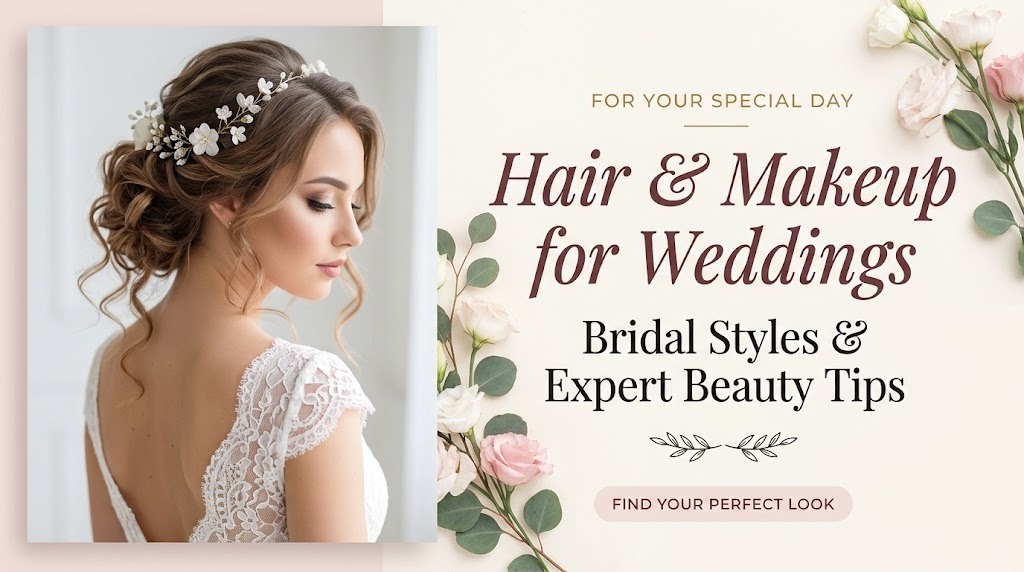
Imagine walking down the aisle with a hairstyle that perfectly complements your dress and makeup that makes you feel confident from the first photograph to the final dance. Every bride wants to feel beautiful on her wedding day, but choosing the right look can be overwhelming. With so many bridal hairstyles, makeup trends, and beauty products available, where should you begin?
The secret to beautiful hair and makeup for wedding celebrations is finding a style that suits your personality, outfit, venue, and comfort level. Whether you love soft, natural makeup with romantic waves or prefer glamorous eyes with an elegant updo, the right combination can bring your bridal vision together.
In this guide, you will discover popular bridal hairstyles, wedding makeup ideas, tips for choosing the right look, and ways to prepare your hair and skin before the big day. You will also learn how to work with a professional makeup artist and hairstylist to create a look that feels comfortable and photographs beautifully.
Why Hair and Makeup Matter on Your Wedding Day
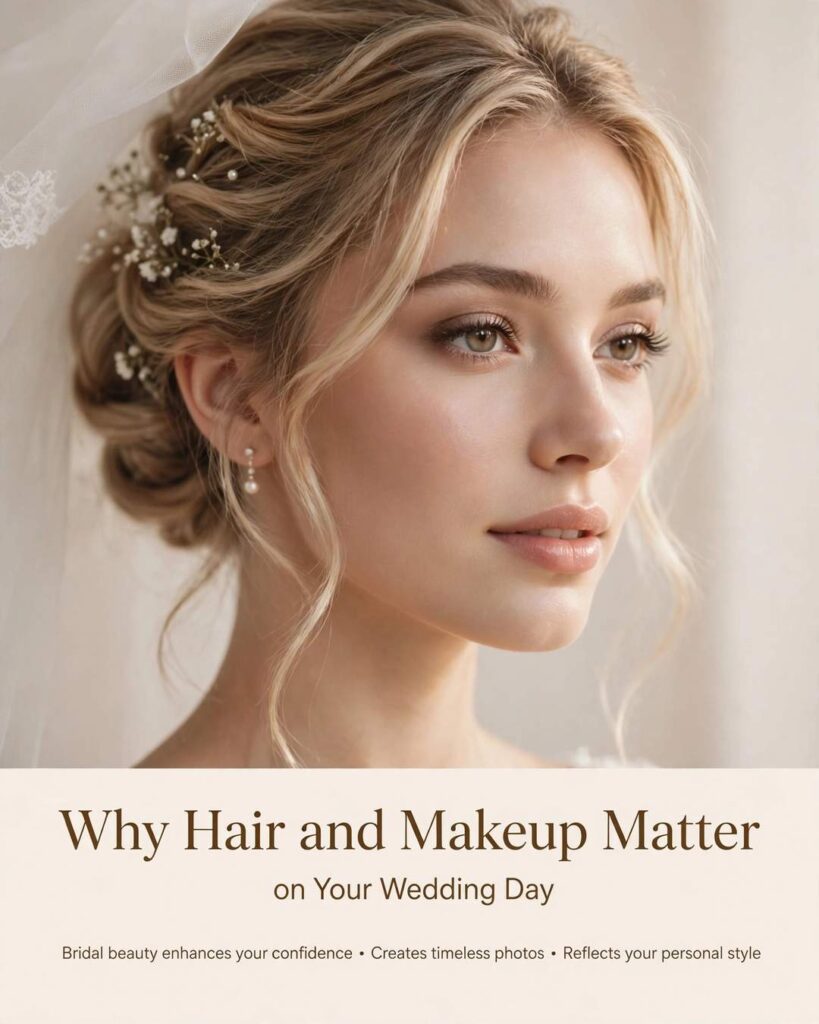
Your wedding look is more than a collection of beauty trends. It is a personal expression of your style and an important part of how you feel during the celebration.
Well-planned hair and makeup can complement your wedding outfit, accessories, and overall theme. A coordinated look can also help you feel prepared for photographs, ceremonies, and hours of celebrating with family and friends.
When planning your bridal beauty routine, consider these factors:
- Your wedding outfit, neckline, and accessories.
- Your preferred makeup finish and hairstyle.
- The season, venue, and expected weather.
- Your natural hair texture and skin characteristics.
- Your comfort throughout the event.
- The amount of time available for getting ready.
Rather than copying a look simply because it is trending, choose elements that make you feel like yourself.
Best Wedding Hairstyles for Brides
The right hairstyle can complement your dress, frame your face, and help secure accessories such as veils, pins, or flowers. Here are some popular options to consider.
1. Romantic Loose Waves
Loose waves are a beautiful choice for brides who prefer a soft, relaxed appearance. They work well with many wedding themes, including garden ceremonies, outdoor celebrations, and romantic evening events.
You can wear loose waves with a middle part, a side part, or a subtle half-up style. Hair accessories such as delicate pins or small floral details can add a personal touch.
For better longevity, ask your hairstylist which preparation and setting techniques suit your hair texture. If your wedding is outdoors, consider how humidity or wind might affect the finished style.
2. Elegant Bridal Updo
An updo creates a polished appearance and can be particularly practical for long celebrations. Popular variations include low buns, textured chignons, and softly pinned styles with face-framing strands.
An updo may suit formal gowns, traditional wedding outfits, and dresses with detailed necklines. It can also provide a secure base for a veil or decorative hairpiece.
Ask your stylist to check that the hairstyle feels comfortable and secure before the event. Avoid pins or tight sections that cause discomfort.
3. Half-Up, Half-Down Hairstyle
A half-up, half-down hairstyle combines the softness of loose hair with the structure of an updo. The upper section can be twisted, braided, or pinned while the remaining hair falls naturally.
This style offers flexibility for brides who want visible length without having all their hair down. It can also accommodate clips, flowers, and certain veil placements.
Discuss your preferred level of volume and texture with your hairstylist so the finished look works with your outfit.
4. Traditional Bridal Hairstyles
Traditional bridal hairstyles vary across cultures and wedding customs. Depending on your outfit and personal preferences, you might choose a sleek bun, a braided style, a decorated updo, or carefully arranged waves.
Hair ornaments, fresh flowers, and decorative pins can coordinate the hairstyle with jewelry and clothing.
If you are wearing a dupatta, veil, or head covering, arrange a trial appointment to ensure that everything stays comfortably in place.
5. Braided Wedding Hairstyles
Braids can add texture and detail to a bridal hairstyle. Options include crown braids, side braids, braided buns, and styles that combine braids with loose curls.
Braided hairstyles can be adapted to different hair lengths and wedding themes. Some styles look understated, while others incorporate decorative pins or flowers.
Bring reference photographs to your appointment, and ask your stylist which version will work best with your hair length and texture.
Popular Wedding Makeup Looks
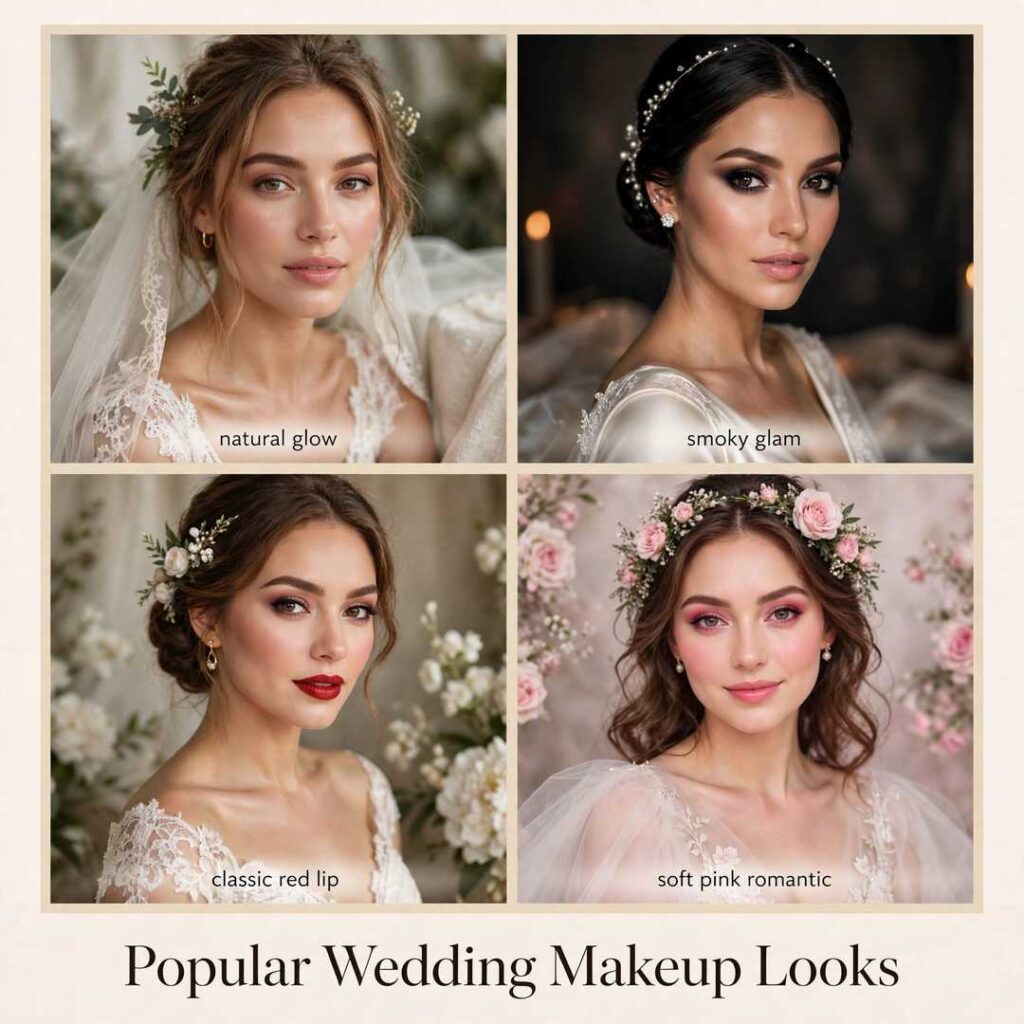
Wedding makeup should complement your natural features, outfit, and personal style. The best look is one that makes you feel confident rather than uncomfortable or overly different from your everyday appearance.
1. Natural Bridal Makeup
Natural bridal makeup focuses on a fresh, balanced finish. It may include lightweight or medium-coverage foundation, softly defined eyes, a neutral lip color, and a subtle blush.
This style is suitable for brides who prefer understated beauty. The goal is not necessarily to use fewer products, but to create a harmonious result without heavy-looking layers.
Tell your makeup artist how much coverage you prefer and whether you like a dewy, satin, or more natural finish.
2. Soft Glam Wedding Makeup
Soft glam is a popular choice for brides who want a polished appearance with gentle definition. It often combines blended eyeshadow, softly shaped brows, defined lashes, coordinated blush, and a complementary lip color.
Soft glam can work with many wedding outfits and hairstyles. You can adjust the intensity of the eyes or lips depending on your personal preference.
During your makeup trial, ask to see the finished look in natural light and indoor lighting.
3. Traditional and Cultural Bridal Makeup
Traditional bridal makeup may feature more defined eyes, coordinated lip colors, carefully blended complexion products, and details that complement cultural clothing and jewelry.
The exact style depends on regional customs, the wedding outfit, and individual preferences. For example, a richly embellished outfit might pair well with more defined makeup, while a simpler outfit could suit a softer look.
Share photographs of your clothing, jewelry, and accessories with your makeup artist before the appointment.
4. Glamorous Evening Makeup
For an evening wedding, some brides prefer more dramatic eyes, luminous complexion products, or a bold lip color. These choices can create a striking look for formal celebrations and evening photography.
If you choose a statement eye, you may prefer a more understated lip, or you can coordinate both features for a more dramatic style.
Your makeup artist can help balance the colors and finishes so the complete look feels intentional.
How to Match Bridal Hair and Makeup
One of the most important parts of planning wedding beauty is making sure your hairstyle and makeup complement each other.
Start by considering your wedding outfit. A detailed neckline or statement necklace may pair well with an updo, while a simpler dress might work beautifully with loose waves. These are suggestions rather than strict rules; your comfort and personal taste matter most.
Next, consider your preferred makeup intensity. Natural makeup can look lovely with soft waves or a relaxed bun, while dramatic evening makeup may pair well with a sleek hairstyle. However, either combination can work when the details are balanced.
Use these practical tips:
- Bring photographs of your dress and accessories to your beauty trial.
- Choose a hairstyle that accommodates your veil or headpiece.
- Coordinate your lip color and blush with the overall color palette.
- Discuss how your makeup will look in different lighting.
- Make sure the hairstyle remains comfortable when you move.
- Choose a look that suits your personality rather than following every trend.
A successful bridal look feels coordinated without requiring every element to match exactly.
Wedding Hair and Makeup for Different Hair Types
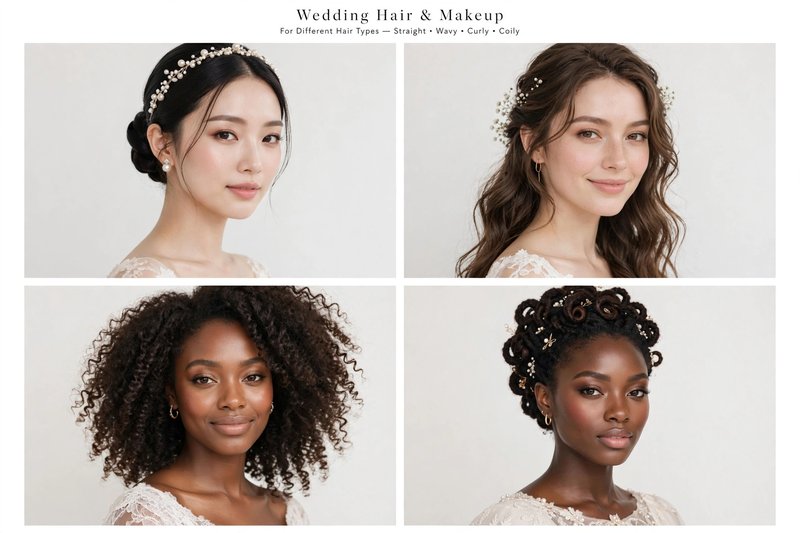
Hair texture, length, and styling history can affect which bridal hairstyles are practical.
Fine or Straight Hair
Fine or straight hair may benefit from suitable styling products, careful sectioning, and a hairstyle designed to maintain its shape. Soft waves, textured buns, and half-up styles are options to discuss with your stylist.
The most important factor is choosing a technique that works with your hair rather than relying on excessive product.
Naturally Wavy or Curly Hair
Natural texture can be incorporated into a bridal hairstyle instead of being completely changed. Defined curls, textured updos, and half-up styles can all work beautifully.
Discuss frizz management, humidity, and your preferred level of definition during the trial. A stylist familiar with your hair texture can help you choose suitable techniques.
Long Hair
Long hair offers flexibility for braids, loose waves, elaborate updos, and half-up hairstyles. However, the weight of the hair and the placement of accessories may affect comfort.
Try the complete hairstyle with your intended veil or headpiece before the wedding.
Short Hair
Short hair can look elegant with polished waves, sleek styling, soft texture, or decorative clips. You do not need long hair to achieve a beautiful bridal appearance.
If you want a different length or volume, discuss temporary extensions with your stylist and test the option before the event.
How to Prepare Your Hair and Skin Before the Wedding
A little preparation can make your wedding morning easier and help your beauty team work efficiently.
Create a beauty schedule. Arrange your hair and makeup trial several weeks before the wedding when possible. This gives you time to adjust the look and confirm the appointment details.
Maintain a familiar skincare routine. Avoid experimenting with multiple new products immediately before the event. New products can sometimes cause irritation, so introduce changes cautiously and seek professional advice for persistent skin concerns.
Follow your hairstylist’s washing instructions. Some styles work best on freshly washed hair, while others need a little texture. Ask your stylist what to do based on your hair type and chosen hairstyle.
Stay hydrated and rest when possible. General self-care can help you feel more comfortable during the celebrations.
Prepare your inspiration photos. Save clear examples of hairstyles, makeup finishes, and colors you like. Point out the specific details you want rather than expecting an exact copy of a photograph.
Allow enough time on the wedding morning. Include time for dressing, accessories, touch-ups, and unexpected delays.
How to Choose a Professional Wedding Makeup Artist and Hairstylist
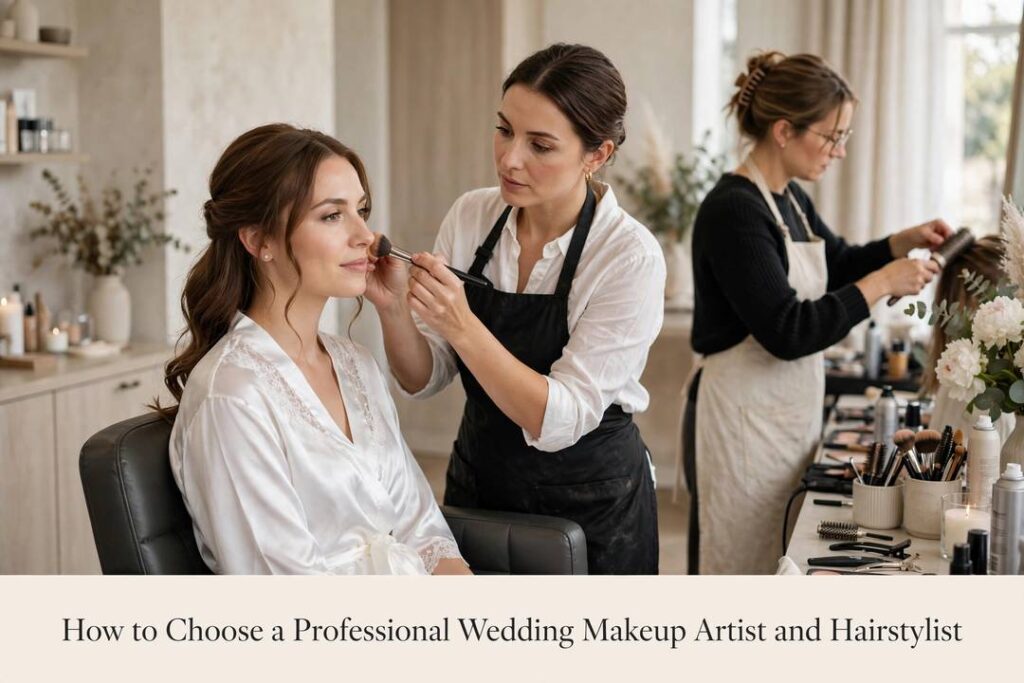
A skilled beauty professional can help turn your ideas into a practical bridal look. Choosing someone whose experience matches your needs is more important than selecting a provider based on popularity alone.
Review Their Portfolio
Look for examples of bridal makeup and hairstyles similar to the look you want. Check whether their portfolio shows different lighting conditions, hair textures, and makeup styles.
Arrange a Trial Appointment
A trial allows you to test the hairstyle and makeup before the wedding. It is also an opportunity to discuss changes, assess comfort, and confirm how accessories will fit.
Discuss Pricing and Services
Ask whether the quoted price includes a trial, travel, touch-ups, additional people, or early-morning appointments. Request a clear breakdown so you understand the full cost.
Confirm Timing and Availability
Make sure the artist and hairstylist can accommodate your schedule. If you are booking separate professionals, coordinate their arrival times and the order of services.
Communicate Clearly
Share your preferences, sensitivities, reference photographs, and any concerns before the appointment. Good communication helps the professionals tailor their work to your needs.
How Much Does Wedding Hair and Makeup Cost?
The cost of wedding hair and makeup varies by location, experience, service level, travel requirements, and the complexity of the requested look.
A simple hairstyle and makeup application may cost less than a package that includes a trial, intricate styling, premium products, and on-location services.
When comparing quotes, ask what is included and whether there are additional charges for travel, early starts, accessories, or touch-ups. Compare the complete service rather than the starting price alone.
Booking early may give you more choice, particularly during busy wedding seasons. However, always review the provider’s portfolio, agreement, and cancellation terms before paying a deposit.
Frequently Asked Questions
1. When should I book wedding hair and makeup?
It is sensible to start researching providers several months before your wedding, especially if your date falls during a busy season. Book your preferred professionals once you have checked availability, pricing, and service details.
2. Should I do my hair or makeup first?
The order depends on your beauty team’s workflow and the hairstyle you choose. Many teams coordinate the two services so that heat styling, setting products, and dressing can be managed efficiently. Ask your providers to create a schedule.
3. Is a bridal hair and makeup trial necessary?
A trial is highly recommended because it allows you to test the look, check comfort, and make adjustments before the wedding day.
4. How can I help my wedding makeup last longer?
Ask your makeup artist about suitable skin preparation, long-wearing products, setting techniques, and a small touch-up kit. Weather, skin characteristics, and the length of the event can all affect wear.
5. What should I bring to my bridal beauty appointment?
Bring inspiration photographs, details of your wedding outfit, and your accessories or veil if possible. Tell your beauty team about product sensitivities and the look you want to achieve.
6. Can I do my own hair and makeup for my wedding?
Yes. If you feel comfortable applying makeup and styling your hair, doing it yourself is an option. Practice the complete look beforehand, allow enough time, and test how it photographs in different lighting.
Final Thoughts
Choosing the right hair and makeup for wedding celebrations begins with understanding your personal style, outfit, hair texture, and comfort needs. From romantic waves and elegant updos to natural bridal makeup and glamorous evening looks, there are many ways to create a look that feels uniquely yours.
Plan your beauty trial early, communicate clearly with your makeup artist and hairstylist, and consider the practical details of your wedding day. With thoughtful preparation, you can create a coordinated bridal look that helps you feel confident, comfortable, and ready to enjoy every moment of your celebration.